The ‘Gentleman’s Game’ Myth and the Work It Leaves Out
The gentleman’s game myth can obscure the work behind cricket. Learn to recognise the people and practical tasks that help a match run smoothly.
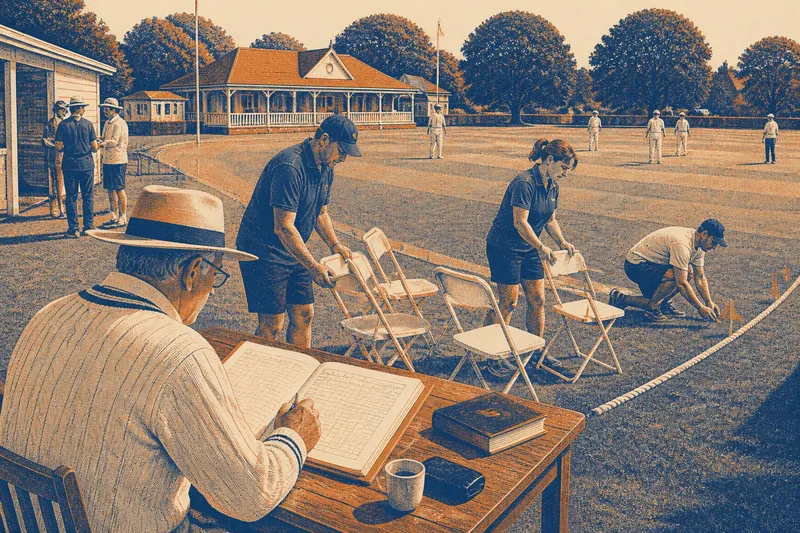
At a local cricket ground, a scorer opens a book while volunteers set out chairs and someone checks the boundary markers. The gentleman’s game myth can make a match look as though it runs on manners alone, leaving these practical contributions outside the frame.
The phrase expresses an ideal of restraint, fair play and good manners. Those values can be worth keeping, but they do not make cricket naturally fair or effortless. The match depends on agreed rules, attentive officials and people doing work that spectators may barely notice.
The gentleman’s game myth turns an ideal into a story
The myth is the familiar picture of cricket as an inherently civilised pastime, played by people who need little oversight because fairness comes naturally to them. It often presents good conduct as an instinct rather than a choice. In practice, a match’s order depends on rules, decisions and people ready to respond when something goes wrong.
The phrase also carries a social image: the well-dressed player, the orderly ground and the assumption that everyone knows their place. That picture can make the organisation disappear, as if the neatness of the occasion arose by itself.
It helps to separate the ideal from the myth. Respect for an opponent, an umpire and the spirit of fair play can guide behaviour. The myth begins when those values are treated as proof that cricket is naturally fair, or that its polished appearance requires no effort.
Cricket’s customs make conduct visible
Players may acknowledge an opponent’s achievement, accept an umpire’s decision and return to their positions without argument. Spectators often value patience and restraint, especially during long passages of play when attention can drift and frustration can rise.
These customs give people a shared vocabulary for respectful cricket, but a custom does not settle every disagreement. Players need to know the Laws and the competition’s playing conditions; umpires apply them, and captains have a part in keeping their teams within the expected standards.
Good manners can mean different things to different people. A quiet player may seem respectful to one observer and distant to another, while a firm appeal can be understood as part of the contest or as needless pressure. The useful question is whether conduct respects the people involved and the rules that govern the match, not whether everyone follows one style.
Ground staff, scorers and volunteers sustain the match
Many people contribute, and their tasks vary with the ground and level of play. Ground staff prepare the playing surface and surrounding area, maintain equipment and respond to changing conditions. Their work may begin before players arrive and continue after spectators have gone.
Umpires manage decisions and communicate with players. Scorers record what happens, while captains organise their sides and help keep the match moving. Club volunteers may arrange fixtures, open facilities, prepare refreshments, handle membership or help a visiting team find its way.
There are less visible responsibilities, too: placing boundary markers, operating the scoreboard and making sure the playing area is ready for the conditions. At a community club, a small group may share these tasks alongside work, study and family commitments. Calling the match effortless can make that labour harder to see or acknowledge.
The umpire’s signals and the scoreboard are in view; arranging access to the ground or coordinating volunteers may not be. A polished match is not evidence that nobody worked. It may simply mean the work was organised well enough not to interrupt play.
The gentleman’s game myth can narrow who belongs
The ideal can sound universal while reflecting a narrow picture of who has traditionally been treated as a natural member of cricket. If the “gentleman” is imagined as the default player or spectator, other people can be cast as visitors to the culture rather than people who help shape it. This can happen through language, assumptions about expertise or whose contribution receives public recognition.
Cricket’s social life is broader than that image. Women and girls, players from different communities, paid professionals, club volunteers and families contribute in different ways. Their presence is part of the living culture around the sport, not an exception to its traditions.
Ordinary club habits can reveal where inherited expectations shape everyday decisions. Who is asked to take on routine work? Who gets introduced as an expert? Whose mistake is treated as a learning moment, and whose as evidence that they do not belong? These questions need not accuse every club of deliberate unfairness; they can help people notice assumptions that might otherwise go unexamined.
Spectators can notice the work without policing manners
Spectators can widen their attention without losing sight of the contest. Notice how a match is kept legible: scorers’ records, an umpire’s signals, the boundary and the people who keep the playing area ready. These details help explain how play is organised, including when weather or a disputed moment interrupts its rhythm.
It is also useful to notice how people respond to pressure. A calm exchange between a captain and an umpire may depend on experience and clear communication, rather than an effortless code of gentlemanly conduct. A player who helps retrieve equipment or checks on an opponent makes a small, observable contribution to the tone of the match.
Say you arrive at a local ground while volunteers are setting out chairs and a scorer is preparing a book. You see that the visiting side still needs directions to the pavilion, so you ask a volunteer where they should go and pass the answer on. The immediate result is that the players know where to head; thanking the volunteer also makes their work visible without turning the moment into a public judgement of anyone’s character.
It is not worth treating every pleasant gesture as a moral test. A missed greeting or a quiet celebration does not reveal a person’s character on its own. Attention is more useful when it recognises the work and choices that sustain the occasion, rather than inviting spectators to police every mannerism.
- Check whether the scorer’s book or scoring device is ready; if it is in use, let the scorer work, and if it is not, ask an organiser whether the match needs scoring help.
- Check whether boundary markers are visible and in place; if they are, leave them undisturbed, and if one has shifted, alert an official rather than moving it during play.
- Check whether a visiting team appears unsure where to go; if its destination is clear, do not interrupt, and if it is not, ask a club volunteer for directions and pass them on.
- Check whether an umpire is speaking with a player or captain; if the exchange is under way, give them room, and if you have a concern, raise it through the club’s or competition’s appropriate channel.
- Check whether chairs or shared facilities are being set out; if the area is ready, keep access clear, and if help is visibly needed, ask the organiser before taking on a task.
- Check whether the club publicly thanks only visible contributors; if less visible roles are missing, suggest naming scorers, ground staff or other volunteers, and if contributions are already recognised, avoid duplicating the effort with another ceremony.
Clubs can honour tradition by naming responsibilities
Clubs can preserve customs while explaining what they ask of people. Welcoming visiting teams, using a respectful tone around decisions and thanking volunteers are concrete practices, not proof that cricket is automatically fair. Naming responsibilities, sharing routine duties and explaining expectations to new members can make club life easier to understand.
Recognition need not become ceremony. A club can credit its scorers in a match note, invite new members to learn how the ground is prepared or include less visible tasks when thanking volunteers. The point is not to rank contributions but to avoid treating skilled and time-consuming work as anonymous background.
When a disagreement occurs, the club’s response matters more than its reputation for good manners. Clear procedures, consistent decisions and a willingness to hear those involved help put stated values into practice. For formal rules, consult the relevant competition authority; for a safety concern, seek guidance from an appropriate qualified professional.
Readers ask how cricket’s gentlemanly tradition works
Is cricket still called the gentleman’s game?
Yes, the phrase remains familiar, but people use it in different ways. Some mean that cricket values respect and self-control; others use it critically to question an old-fashioned image that overlooks labour and unequal access.
Does the phrase mean players should not appeal?
No. An appeal is part of how a decision can be sought under the Laws, and its acceptability depends on how it is made and on the match’s conditions. Courtesy does not require players to stop competing or umpires to avoid making a firm decision.
Why mention ground staff and volunteers when discussing traditions?
Traditions are sustained by repeated actions, not just words or dress. Preparing a ground, keeping score and welcoming a visiting side are practical parts of the shared customs that allow cricket to continue.
Can cricket be respectful without using the gentleman’s game label?
Yes. A club can state the behaviour it expects and recognise the people who make the match possible without relying on a label that may not include everyone. Specific customs are easier to explain and practise than an ideal left undefined.
The gentleman’s game myth is easier to question when the match is seen in full: players compete, officials make decisions, and workers and volunteers prepare the conditions for play. Cricket’s traditions are stronger when they name both the conduct expected on the field and the people whose labour makes it ready.
Next time you watch a match, treat the gentleman’s game myth as a phrase to examine, not a verdict to accept. Notice one task that has to happen before play can continue and who carries it out. That small act of attention can make an otherwise invisible contribution part of what you see.